
How to Build a 15-Minute Daily Spiritual Practice for Inner Peace
Discover how to build a **daily spiritual practice for inner peace** with a simple 15-minute routine featuring conscious breathing, Ram Naam meditation, mindfulness, gratitude, and daily intention-setting. Learn practical ways to develop a consistent spiritual habit, reduce daily distractions, and make time for self-reflection, even with a busy schedule. Explore this beginner-friendly guide by **Astro Dr. Gaurav Saxena** to create a meaningful spiritual routine that aligns with your beliefs and
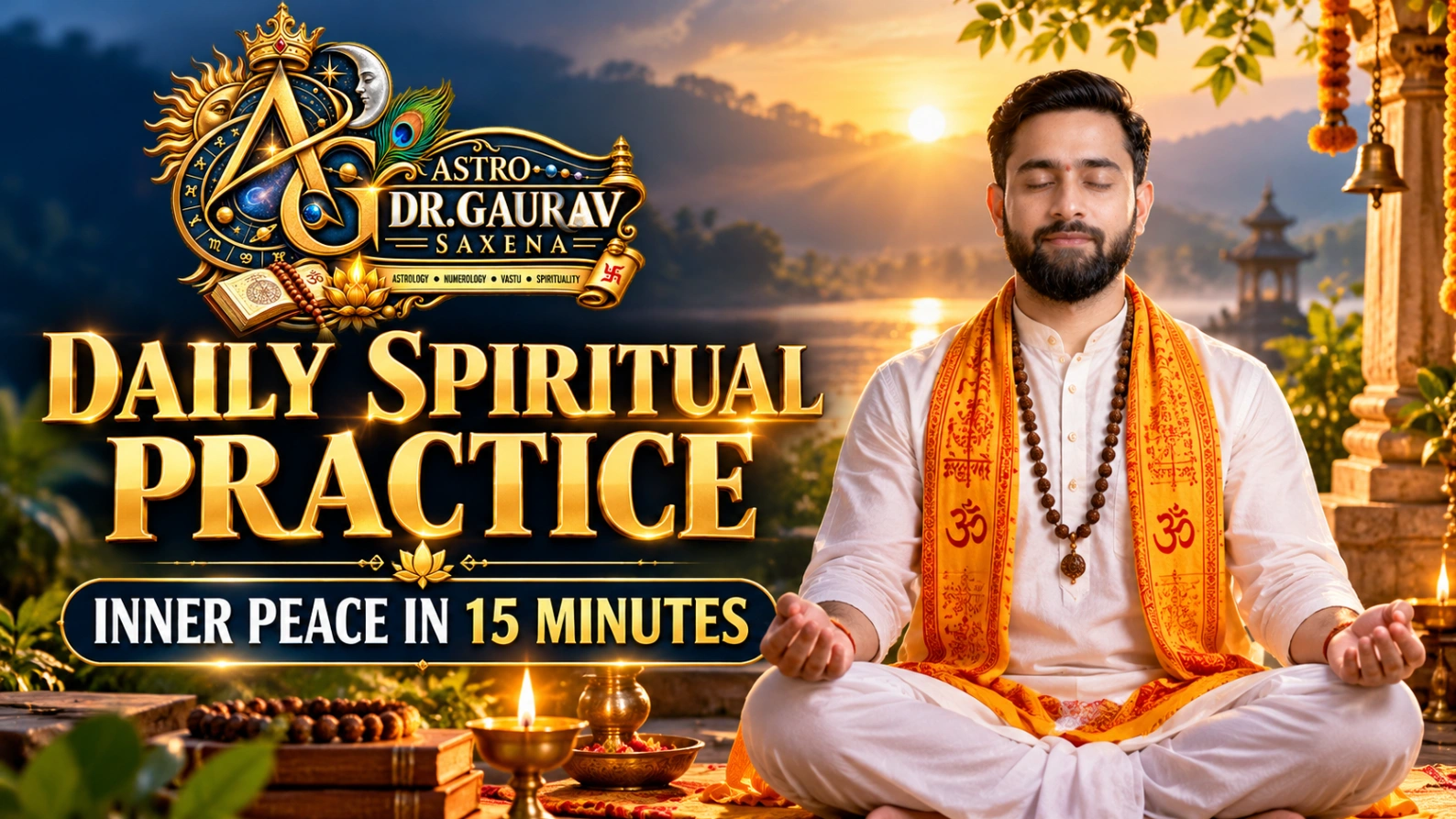
Finding time for spirituality can be difficult when work, studies, family responsibilities, and daily distractions compete for attention. A daily spiritual practice for inner peace offers a simple way to pause, reconnect with yourself, and approach everyday responsibilities with greater awareness. You do not need hours of meditation or complicated rituals to begin. A consistent 15-minute spiritual routine can provide a practical starting point for reflection, mindfulness, gratitude, and personal discipline.
For beginners, the goal is not to eliminate every thought or achieve a particular spiritual experience. It is to create a small, meaningful space in the day for conscious breathing, mantra repetition, meditation, gratitude, and intention-setting. Astro Dr. Gaurav Saxena encourages readers to approach spiritual practices with patience, sincerity, and realistic expectations.
Why a Short Spiritual Routine Can Be More Sustainable
An ambitious routine may be difficult to maintain when your schedule becomes demanding. Starting with a short commitment makes it easier to establish a habit without creating unnecessary pressure.
A daily spiritual practice for inner peace works best when it fits naturally into your lifestyle. Fifteen minutes before breakfast, after waking up, or before bedtime may be more manageable than an elaborate routine that requires extensive preparation.
Consistency matters more than complexity. Some days may feel peaceful, while others may bring restlessness or distraction. Both experiences are normal. Treat your practice as an opportunity to observe yourself rather than a performance that must meet a particular standard.
The 15-Minute Framework
This 15-minute spiritual routine contains five simple activities that add up to exactly 15 minutes:
Minutes 1–3: Conscious breathing.
Minutes 4–8: Mantra repetition or Ram Naam.
Minutes 9–12: Quiet meditation.
Minutes 13–14: Gratitude.
Minute 15: Daily intention.
Choose a comfortable place where interruptions are less likely. Sit on a chair, cushion, or another supportive surface. Keep your posture relaxed and adapt the routine to your physical needs.
Minute 1–3: Conscious Breathing
Begin by sitting comfortably and relaxing your shoulders, jaw, and hands. Notice the natural movement of your breathing without trying to control it.
Observe the air entering and leaving your body. There is no need to force deep breaths, hold your breath, or breathe rapidly. If you become uncomfortable, return to your normal breathing pattern.
This conscious breathing practice helps you establish a clear starting point for your routine. When thoughts arise, acknowledge them and gently return your attention to the next breath.
Minute 4–8: Mantra or Ram Naam
For the next five minutes, choose a mantra that reflects your beliefs and personal preferences. If you feel connected to Shri Ram, you may gently repeat Ram Naam, either silently or aloud.
You can coordinate the repetition with your natural breathing, use a mala if it is meaningful to you, or simply repeat the name with steady attention. There is no requirement to follow a particular method if it does not suit your practice.
People from other spiritual traditions may choose a different mantra, sacred phrase, or word that represents their values. Those who prefer a non-religious approach can use a simple word such as “peace” or “gratitude.”
Ram Naam meditation can serve as a devotional practice for people who find meaning in remembering Shri Ram. Approach it with sincerity rather than treating repetition as a guarantee of a specific outcome.
Minute 9–12: Meditation
Spend four minutes sitting quietly. Observe your breathing, notice the sounds around you, or watch thoughts pass through your awareness without judging them.
A daily meditation practice does not require an empty mind. Thoughts about work, relationships, responsibilities, or unfinished tasks may appear. When you notice that your attention has wandered, gently bring it back to your chosen point of focus.
This simple approach makes meditation accessible to beginners who believe they must achieve perfect concentration. The purpose is to practise returning your attention, not to criticise yourself for becoming distracted.
Minute 13–14: Gratitude
Use these two minutes to identify one or two things you appreciate. They might include a supportive family member, a helpful conversation, a meal, an opportunity to learn, or a small moment of comfort.
Your daily gratitude practice does not require pretending that every part of life is positive. You can acknowledge difficulties while also recognising something worthwhile in your day.
If writing helps you reflect, record one sentence in a notebook after completing the routine. Over time, this can become a useful record of what matters to you.
Minute 15: Daily Intention
Finish by selecting one realistic intention for the day.
For example, you might decide to listen carefully during an important conversation, respond patiently to a difficult situation, complete one priority task, or make time for someone who needs your attention.
A daily intention turns reflection into practical behaviour. Instead of expecting a spiritual routine to solve every problem, use it to remind yourself how you want to act when ordinary challenges arise.
How to Maintain Consistency
Building a consistent habit requires a routine that is easy to repeat. These practical steps can help:
Choose a regular time: Connect your practice to an existing habit, such as waking up or preparing for bed.
Prepare your space: Keep a cushion, chair, or mala ready if you use one.
Keep the routine simple: Avoid adding unnecessary steps before the basic routine becomes familiar.
Reduce distractions: Silence non-essential notifications and choose a reasonably quiet place.
Restart without guilt: If you miss a day, resume when you can instead of treating the interruption as failure.
A daily spiritual practice for inner peace should support your life rather than become another source of pressure. If 15 minutes occasionally feels difficult, begin with a shorter session and gradually return to the complete routine.
Common Mistakes Beginners Make
Beginners sometimes expect immediate changes in their emotions, concentration, or circumstances. Such expectations can create disappointment when a session feels ordinary or distracting.
Another common mistake is comparing your experience with someone else's. Meditation is a personal practice, and different people approach spirituality through different beliefs, needs, and routines.
Avoid forcing concentration, judging every thought, or assuming that a missed session erases your progress. Spiritual practice is not a competition, and no particular experience is required for a session to be worthwhile.
A spiritual routine for beginners should also remain flexible. If sitting still causes discomfort, change your position. If a religious mantra does not match your beliefs, choose another form of reflection. Spirituality should not replace appropriate professional healthcare when physical or mental health concerns require attention.
Morning vs Evening Practice
Both morning and evening can be suitable times for a daily spiritual practice for inner peace. The better choice depends on your responsibilities, energy levels, and ability to practise consistently.
A morning spiritual routine may help you establish a deliberate starting point before work, studies, or family commitments begin. It can include breathing, mantra repetition, gratitude, and an intention for the day.
An evening spiritual practice may provide an opportunity to reflect on your experiences, acknowledge what you appreciate, and prepare mentally for the following day. If you are tired at night, keep the routine comfortable rather than forcing yourself to complete it perfectly.
There is no universal rule that one time is spiritually superior for everyone. Choose the time that fits your life and is easiest to maintain.
Adapting the Routine to Your Lifestyle
A sustainable daily spiritual practice for inner peace should reflect your circumstances rather than follow a rigid template.
Busy professionals can practise before checking emails. Students can use the routine before beginning a study session. Parents may choose a quiet period when household responsibilities temporarily ease. People with limited mobility can practise in a supported seated position or adapt the activities as needed.
You can also adjust the spiritual elements according to your beliefs. Some people may prefer Ram Naam, while others may choose silent meditation, prayer, mindful breathing, or reflective journaling.
The essential structure remains straightforward: pause, focus, reflect, appreciate, and choose a meaningful intention. You can use these five activities as a foundation and make reasonable adjustments without losing the routine's simplicity.
Turning a Routine Into a Long-Term Spiritual Discipline
A short routine becomes a long-term discipline through repetition, patience, and realistic expectations. Rather than measuring progress by unusual experiences, consider whether you are becoming more deliberate about your daily choices and more willing to make time for reflection.
After a few weeks, review which parts of the practice feel natural and which require adjustment. You might prefer a different time, a quieter setting, or a particular mantra. These changes can help you maintain the habit without making it unnecessarily complicated.
A daily spiritual practice for inner peace is not a promise that life will become free from stress or uncertainty. It is an opportunity to cultivate a regular moment of awareness and reconnect with the values that guide your decisions.
Astro Dr. Gaurav Saxena encourages readers to begin with manageable steps and deepen their spiritual understanding at their own pace. If you wish to explore spiritual guidance or related practices, visit astrodrgauravsaxena.com.
Frequently Asked Questions
How can I start a daily spiritual practice?
Start by setting aside a manageable period in a quiet or comfortable place. Follow the five steps of conscious breathing, mantra repetition, meditation, gratitude, and intention-setting. Begin with the 15-minute framework or shorten it when necessary, then build consistency gradually.
Is 15 minutes of meditation enough for beginners?
Fifteen minutes is a reasonable starting point for a beginner's spiritual routine, although the entire routine includes activities beyond meditation itself. You can begin with a shorter meditation period and increase it according to your comfort. Individual experiences vary, and no specific result is guaranteed.
Can I include Ram Naam in my daily spiritual routine?
Yes. If you feel devotion toward Shri Ram, you can include Ram Naam through gentle repetition, prayer, or silent remembrance. You may also choose another mantra or reflective practice that aligns with your personal beliefs.
Is morning or evening better for spiritual practice?
Neither time is universally better. Morning practice may fit well before daily responsibilities begin, while evening practice can offer time for reflection. Select the period that best suits your schedule and allows you to practise regularly.
How can I stay consistent with my spiritual routine?
Choose a regular time, prepare a comfortable space, keep the activities simple, and connect the practice to an existing daily habit. If you miss a session, resume without guilt. A flexible routine is often easier to maintain than one built around perfection.
Conclusion
Building a daily spiritual practice for inner peace does not require an elaborate schedule or a particular spiritual background. Begin with three minutes of conscious breathing, five minutes of mantra or Ram Naam, four minutes of meditation, two minutes of gratitude, and one minute of intention-setting. Together, these activities create a practical 15-minute routine that can fit into an ordinary day.
The value of the practice lies in returning to it with patience and sincerity. Adapt it to your beliefs, physical comfort, and schedule, and allow your experience to develop without demanding guaranteed outcomes.
Start with one session today. Keep it simple, practise consistently, and use what you learn to approach daily life with greater awareness.
Astro Dr. Gaurav Saxena
Phone: 9821549939
Alternative Contact: 9129950235
Website: https://astrodrgauravsaxena.com/